The Cost of Industrialization

One of the greatest strengths of this lesson is its wealth and variety of primary sources. In addition to firsthand narrative accounts, the site also includes many photographs and political cartoons for students to analyze. Another strength is the way the lesson engages students in discussing sources with each other: students share their perceptions with one another after each step of document analysis, and then comment on one another’s perceptions—setting the stage for lively historical discussion and debate.
Students begin the lesson by taking a brief opinion poll regarding industrialization, organized labor, and economic justice. At the end of the lesson students take the same poll, and discuss with their peers how their perceptions have changed as result of what they learned during the lesson.
Many of the text documents are long and may be challenging for some students, though some, like “Days and Dreams” by Sadie Frown would be relatively accessible to a high school student, or an advanced middle school student. It is written in narrative style, in simple language, and is of a moderate length. Other documents may need adaptation to meet student reading levels. However, the lesson also contains a sizeable collection of political cartoons, photographs, and other images. These could very easily form the central focus of the lesson, providing lots of material for students to discuss with one another.
Most of the documents (particularly the photos and cartoons) clearly condemn the factory owners. There is one account of the fire from the factory owners’ point of view, in step five, which is listed as an “extra document,” but one that is “strongly recommended.” We echo that recommendation as this document allows students to see an alternative point of view on the event.
While students use primary sources as a vehicle for reshaping their initial hypotheses about industrialization, organized labor, and economic justice, information about the circumstances of each source’s creation is not always readily available to students. Where this is the case, we recommend that teachers encourage students to use the source’s content to identify the perspective of its author.
Overall, this is a good lesson that provides a useful tool in highlighting for students how their perceptions of history can change after exposure to a large mass of evidence. Often when teaching students the historical process, it is helpful to focus on just one aspect of historical thinking; otherwise students easily become overwhelmed. This lesson does just that: it helps students to focus on their own changing perceptions as they encounter the documents—an essential element of historical thinking.
Notes
Teachinghistory.org Lesson Plan Rubric
| Field | Criteria | Comments |
|---|---|---|
| Historical Content | Is historically accurate? | Yes |
| Historical Content | Includes historical background? | Yes. Wealth of background from the Cornell University website. |
| Historical Content | Requires students to read and write? | Yes. Significant reading with many opportunities for writing. |
| Analytic Thinking | Requires analysis/construction of interpretations using evidence? | Yes. Students analyze sources to refine their interpretation. |
| Analytic Thinking | Requires close reading and attention to source information? | No. Some source information included; teachers can add requirements. |
| Scaffolding | Appropriate for stated audience? | Yes |
| Scaffolding | Includes scaffolding materials and strategies? | No. Additional adaptation of documents may be necessary. |
| Lesson Structure | Includes assessment criteria focused on historical understanding? | Yes. The second part of the assessment is especially strong. |
| Lesson Structure | Defines clear learning goals and progresses logically? | Yes |
| Lesson Structure | Includes clear directions; realistic for classrooms? | Yes |
Related Topics
Triangle Shirtwaist Factory Fire
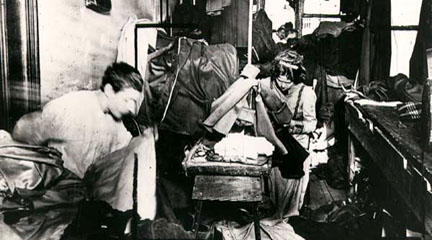
A variety of primary sources and background essays explore the 1911 fire, a hallmark tragedy of the industrial age.
Intertwined Development: Railroads and Political Parties
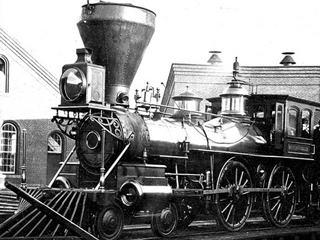
The influence of the booming rail system on the growth and development of three political parties in the late 19th and …