Messages of Houses and Their Contents, 1780-1820
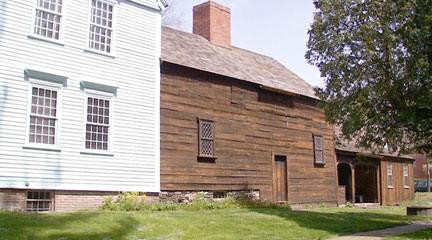
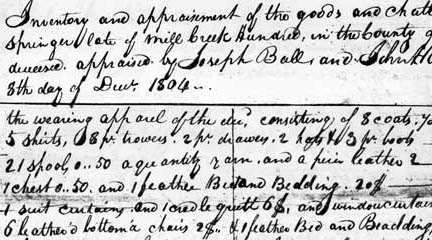
Personal possessions help us interpret the past, and this lesson encourages students to think about the “stuff” that people owned in early America. Students examine photographs of reconstructed rooms, inventories of possessions, and house layouts from different time periods and are asked to make inferences about how changes in common household possessions reflect broader changes in society. The lesson is made up of four one-hour activities, any one of which can stand on its own. In the first activity students compare two household inventories that list an individual’s possessions and their value. One set of inventories is presented as original documents which give students a flavor of the spelling and penmanship of the time. Students are also given typed transcribed versions of the texts for easier (though still challenging) reading. The second and third activities focus on visual analysis. Students examine a series of photographs comparing rooms decorated according to styles between 1775 and the 1830s and floor plans of two homes. These images are excellent sources of evidence for the changes in consumer goods, fashion and technology that occurred in the early nineteenth century. A fourth (and in our opinion optional) activity focuses on changes in household gardens. All four activities are structured around discussion of differences that students are encouraged to notice in the images and artifacts. For homework, students write paragraphs about what changes in personal items may reveal about the past.
Notes
Teachinghistory.org Lesson Plan Rubric
| Field | Criteria | Comments |
|---|---|---|
| Historical Content | Is historically accurate? | Yes. Documents and images from the Memorial Hall Museum collection. |
| Historical Content | Includes historical background? | Yes. Background essay for teachers; historical context for students in garden activity. |
| Historical Content | Requires students to read and write? | Yes. Students read original and transcribed primary sources. Homework requires writing. |
| Analytic Thinking | Requires analysis/construction of interpretations using evidence? | Yes. Discussion questions focus on constructing interpretations. |
| Analytic Thinking | Requires close reading and attention to source information? | Yes. Close attention to visual detail and basic source information. |
| Scaffolding | Appropriate for stated audience? | Yes |
| Scaffolding | Includes scaffolding materials and strategies? | Yes. Specific questions provided to help students analyze documents. |
| Lesson Structure | Includes assessment criteria focused on historical understanding? | No. Written task assesses learning but criteria are absent. |
| Lesson Structure | Defines clear learning goals and progresses logically? | Yes. Clear goals; reviewers recommend focusing on activities one and two. |
| Lesson Structure | Includes clear directions; realistic for classrooms? | Yes. Easy to use. Access to a computer that can project images is desirable. |