A Look at Slavery through Posters and Broadsides
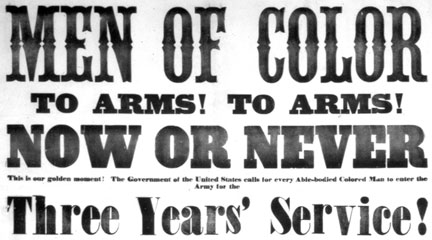
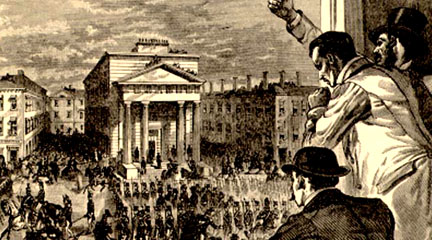
This well-planned lesson, which uses posters on slavery and abolition, teaches students to ask important questions as they read a primary source. First, the teacher models the task by analyzing a representative poster in front of the classroom. In small groups, students then analyze additional posters, locating such information as author, audience, purpose, and message. They use this information to consider the attitudes towards slavery that the posters convey.
One strength of the lesson is that the primary sources are given in two formats: students receive historically evocative reproductions of the original posters along with easy-to-read typed transcriptions. Some teachers may choose to highlight important text, particularly for beginning readers; other teachers will want to leave it up to students to locate and identify this crucial information.
This lesson appears in the December 2004 issue of History Now, a quarterly journal of the Gilder Lehrman Institute of American History.
Notes
Teachinghistory.org Lesson Plan Rubric
| Field | Criteria | Comments |
|---|---|---|
| Historical Content | Is historically accurate? | Yes. Lesson is accurate and up-to-date. |
| Historical Content | Includes historical background? | No. The lesson plan’s Teacher Resources section includes links to information about historical context. |
| Historical Content | Requires students to read and write? | Yes. All students read, and one student per group records information. Students write a news story about their assigned poster. |
| Analytic Thinking | Requires analysis/construction of interpretations using evidence? | Yes. The Poster Inquiry Sheet provides a method for identifying and interpreting historical facts. |
| Analytic Thinking | Requires close reading and attention to source information? | Yes. During modeling and group work, students learn how to read primary sources. |
| Scaffolding | Appropriate for stated audience? | Yes. Some language may be difficult, but teachers can highlight sections of text. |
| Scaffolding | Includes scaffolding materials and strategies? | Yes. Teacher modeling and the Poster Inquiry Sheet provide helpful scaffolds. |
| Lesson Structure | Includes assessment criteria focused on historical understanding? | No. No assessment rubric included, but teachers can check in with small groups. |
| Lesson Structure | Defines clear learning goals and progresses logically? | Yes. Helps students learn about slavery and abolition while analyzing primary sources. |
| Lesson Structure | Includes clear directions; realistic for classrooms? | Yes. Modeling is pedagogically useful, though reading every poster may be time-consuming. |